The row that looks finished
Two traders open the same instrument, at the same size, in the same minute.
The first is managing an exposure he planned that morning. The second is forty seconds past a loss he has not accepted, and he is in the position because being in something felt better than sitting there watching a flat chart.
Every system the firm owns records one event. Same instrument. Same size. Same timestamp. Two rows that match on every field a platform captures.
The industry has largely agreed on the first half of this. Ask most operators and they will tell you their trade data does not reveal whether a decision came from a plan or from frustration. That much is settled and it is not the interesting part.
The interesting part is what the firm does next, because it does not experience the gap as a gap.
A finished row is worse than a missing one
Missing data announces itself. A null field, a failed sync, a broken feed: all of them raise a question, and someone goes and looks.
Nothing about a complete row asks to be checked. The instrument is there. The size is there. The entry, the exit, the result, the timestamp are all there. The row looks like a finished record of a decision, and it is read as one.
So the reason gets supplied by whoever reads it. A risk analyst sees size drift after a loss and reads recklessness. A retention lead sees the same rows and reads disengagement. Neither is looking at evidence of a motive. Both are looking at an action and filling in the rest, and the fill happens quietly enough that nobody logs it as an assumption.
This is the part worth naming. The firm is not short of information about its traders. It is holding a large, clean, well-structured dataset in which one column was never populated and no system will ever flag it as empty.
The direction nobody counts
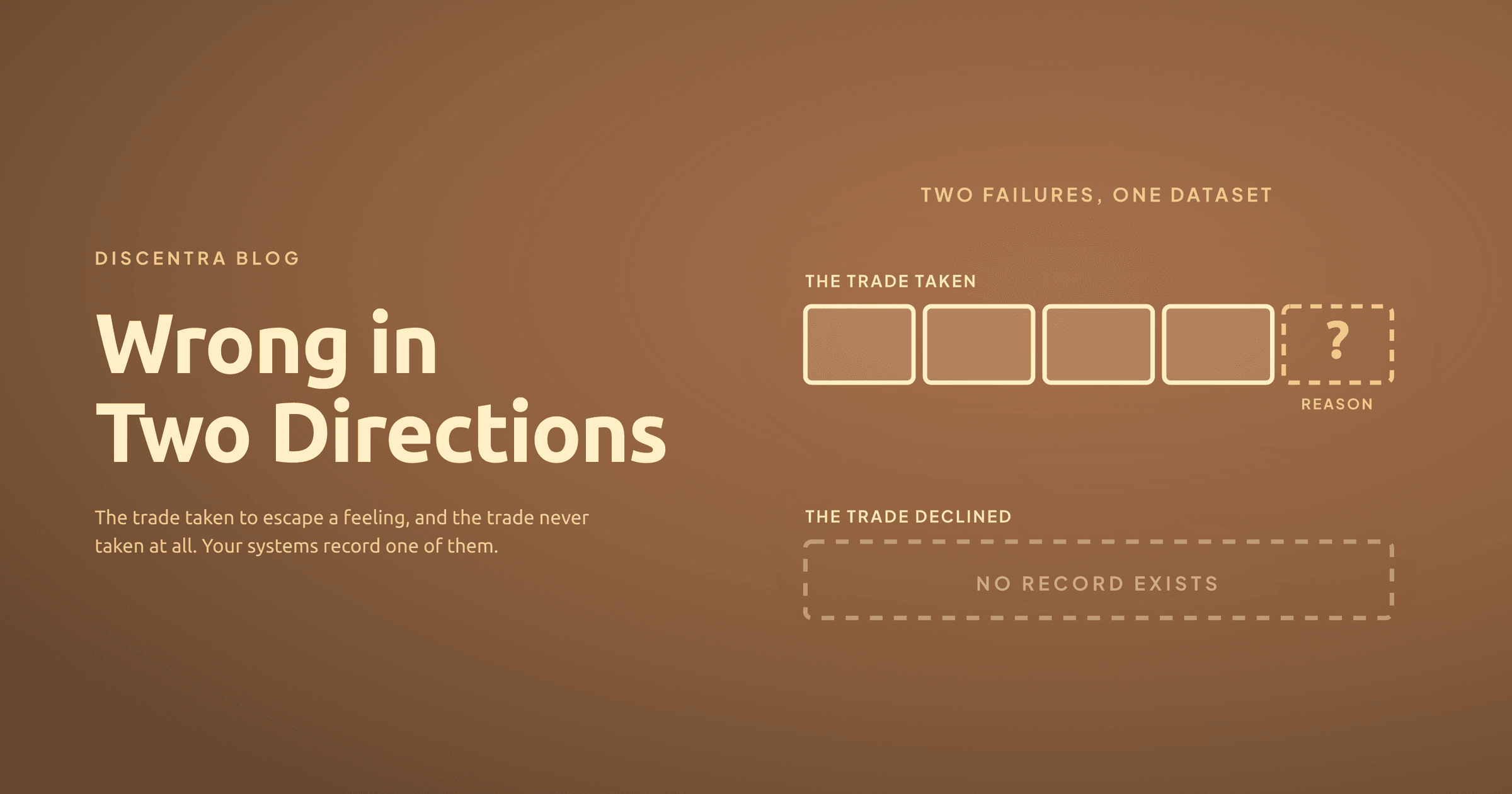
There is a second failure running the other way, and it gets far less attention because it produces no rows at all.
A trader who considers a setup at the wrong moment and declines it generates no order. Nothing enters the profit and loss. Nothing appears on a risk report or a retention dashboard. Every metric a firm holds is a record of an action taken, and restraint is the absence of an action.
The consequence is uncomfortable when you follow it through. The behaviour a firm most wants more of, from the traders it pays most to replace, is the behaviour it has no record of. It cannot reward what it cannot see. It cannot count it in a cohort review. It cannot even tell a trader who is quietly getting better from one who has gone quiet before leaving, because on the firm's side both look like reduced activity.
For a brokerage the same blind spot sits one seat further out. If retention runs as an outbound desk cued by deposit events, the only behaviour that reaches it is behaviour that already moved money.
One direction gives you a confident wrong answer. The other gives you no answer and does not tell you it is missing.
What we can and cannot see
We should be specific about our own position here, because a vendor claiming to read motive would be doing the same thing this piece is arguing against.
Discentra's engine runs six stateless trigger rules. A daily loss limit breach. A revenge trade, defined as a loss followed by re-entry inside sixty seconds at larger size. Tilt, defined as five or more trades in fifteen minutes. Five consecutive losses. Position size overload. And flow state, five consecutive wins, which carries its own risk.
Six rules. All six fire on an action that has already happened. None of them fires on a trade a trader chose not to place, and none of them reads intent. What the engine detects is behaviour, from which it infers a state.
That is a real limit and we would rather state it than have a head of risk find it in the second meeting. The reason it still matters is timing rather than omniscience. An inference made four minutes after a trigger, while the position is still open and the trader can be asked, is a different quality of inference from one reconstructed from fills the following morning. The intervention window does not reveal the motive. It reaches the only person who knows it, at the one moment the answer is still available.
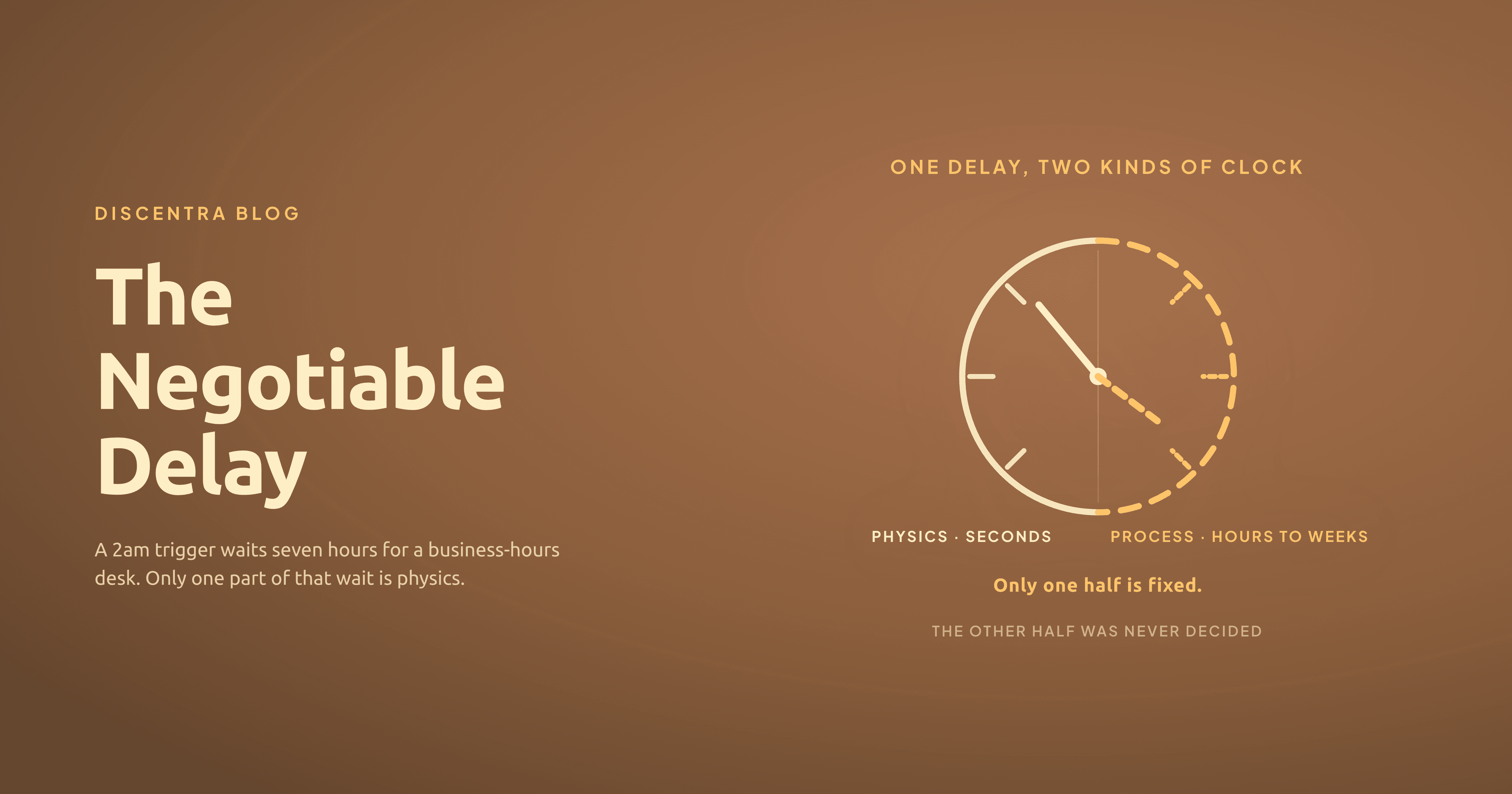
It is the same constraint that produces the intervention gap, reached from the other side: that piece covers when a firm is able to respond, and this one covers what it believes about the trader while it waits.
Where this leaves the dashboard
None of this argues for better analytics, and it is not a case against the tools a firm already runs. Detection does what it says: it finds the behaviours that show up in the data, and it finds them earlier than a payout review does. The analytics layer measures. It was never built to interrogate.
The narrower claim is this. Any conclusion a firm reaches about why a trader is behaving a certain way is an inference drawn from actions, made by someone who was not there, about a state that left no trace. That inference can be sharpened, and the honest way to sharpen it is to shorten the distance between the behaviour and the question, not to add columns to the row.
Most firms already know their data cannot see intent. Fewer have noticed that the record does not look like it is missing anything.
Two traders. Same instrument, same size, same minute. The firm has one row, and it is going to act on it.
Sources and notes
- The six trigger rules are Discentra's own stateless rule set, described here as implemented. They are product facts, not research findings.
- The four-minute intervention window is an internal operational construct, not a peer-reviewed measurement. It describes the period we design interventions around, built from the observed re-entry pattern after a loss. We label it as a construct wherever it appears.
- The sixty-second re-entry and five-trades-in-fifteen-minutes thresholds are our own trigger definitions rather than industry standards. Other firms draw these lines differently.
- No claim is made here about neurochemistry, stress hormones or reaction times. The argument is about what a record contains and what it omits, and it does not depend on physiology.
- "Coaching, not financial advice" is a boundary on the product, not a disclaimer added to this page. Discentra does not recommend trades, sizes or entries.